
2026 Biophilic Bistro Trend: Sustainable European-Design Furniture Sourcing for High-Traffic Venues
İçindekiler
- Introduction: The 2026 Biophilic Bistro Paradigm
- Material Science: Wood Species and Sustainability
- European Oak (Quercus robur)
- American Black Walnut (Juglans nigra)
- FSC-Certified Beech (Fagus sylvatica)
- Joinery and CNC Precision
- Upholstery and Foam Specifications
- Case Study: The Zara Chair
- Case Study: The Elite Chair
- Case Study: The Pieno Chair
- Sourcing Strategy for High-Traffic Venues
- Key Takeaways
- FAQ
Introduction: The 2026 Biophilic Bistro Paradigm
The hospitality industry is undergoing a material and aesthetic transformation. By 2026, the biophilic bistro—a high-traffic venue that integrates natural forms, sustainable materials, and rigorous durability—will dominate urban landscapes from Paris to Istanbul. As a factory insider with two decades in European furniture manufacturing, I have witnessed the shift from disposable contract furniture to investment-grade, repairable pieces. This article dissects the technical specifications, wood species, joinery methods, and sourcing strategies that define the 2026 biophilic bistro movement.
High-traffic environments demand more than aesthetics. They require furniture engineered to withstand 10,000+ cycles of use per year, while maintaining a connection to nature. The European design tradition, with its emphasis on craftsmanship and material honesty, provides the perfect foundation. We will examine three iconic models—the Zara, Elite, and Pieno chairs—as case studies in sustainable, high-performance design.
Material Science: Wood Species and Sustainability
European Oak (Quercus robur)
The backbone of premium bistro furniture remains European oak. Sourced from FSC-certified forests in France and Germany, this species offers a Janka hardness of 1,360 lbf, making it resistant to dents and scratches from daily commercial use. For the 2026 trend, we specify kiln-dried oak to 8–10% moisture content, ensuring dimensional stability in fluctuating humidity. Steam-bent components, such as the backrest of the Elite chair, require precise CNC routing with ±0.2 mm tolerance to achieve seamless curves without stress fractures.
American Black Walnut (Juglans nigra)
For accent pieces and tabletops, walnut provides a rich, dark contrast. With a Janka rating of 1,010 lbf, it is softer than oak but offers superior shock resistance. In high-traffic bistros, walnut surfaces are treated with a hard-wax oil finish containing natural resins—avoiding polyurethane coatings that can crack under thermal cycling. The Pieno chair uses walnut veneer over a birch plywood core, reducing weight while maintaining a solid-wood appearance.
FSC-Certified Beech (Fagus sylvatica)
Beech is the workhorse of European contract furniture. Its Janka hardness of 1,450 lbf and excellent steam-bending properties make it ideal for curved chair frames like the Zara. We specify 30 mm thick beech for legs and 18 mm for backrests, with all joints reinforced using Domino tenons—a system that provides 40% greater tensile strength than traditional dowels.
Joinery and CNC Precision
The 2026 biophilic bistro demands joinery that is both invisible and indestructible. Our factory employs a five-axis CNC machining center with ±0.1 mm repeatability. For the Elite chair, the side stretcher-to-leg connection uses a hidden mortise-and-tenon joint, glued with polyurethane adhesive and reinforced with a stainless steel screw from the underside. This assembly withstands 150 kg of lateral force—exceeding EN 16139:2013 standards for contract seating.
CNC tolerances are critical for nesting multiple chairs per euro pallet. The Zara chair, for instance, has a nesting depth of 120 mm, allowing 40 units per pallet. This reduces shipping carbon footprint by 35% compared to non-nesting designs. The CNC program also pre-drills holes for self-tapping inserts, enabling tool-free assembly and disassembly for repair or recycling.
Upholstery and Foam Specifications
Biophilic design extends to textiles. For high-traffic venues, we specify contract-grade fabrics with a minimum Martindale rub count of 100,000. The 2026 palette includes linen blends (55% linen, 45% recycled polyester) with a GSM of 380–420 g/m². These fabrics are treated with a water-repellent finish that withstands 10+ industrial launderings without pilling.
Foam density is non-negotiable. The Zara and Pieno chairs use cold-cure molded polyurethane foam with a density of 50 kg/m³ and an ILD (indentation load deflection) of 40–45. This combination provides immediate comfort while retaining shape after 100,000 cycles of compression testing. For the Elite chair, we use a multi-layer system: a 20 mm base layer of 60 kg/m³ foam for support, topped with 10 mm of viscoelastic memory foam for pressure relief. All foams are CertiPUR-US certified, with zero ozone-depleting substances.
Case Study: The Zara Chair
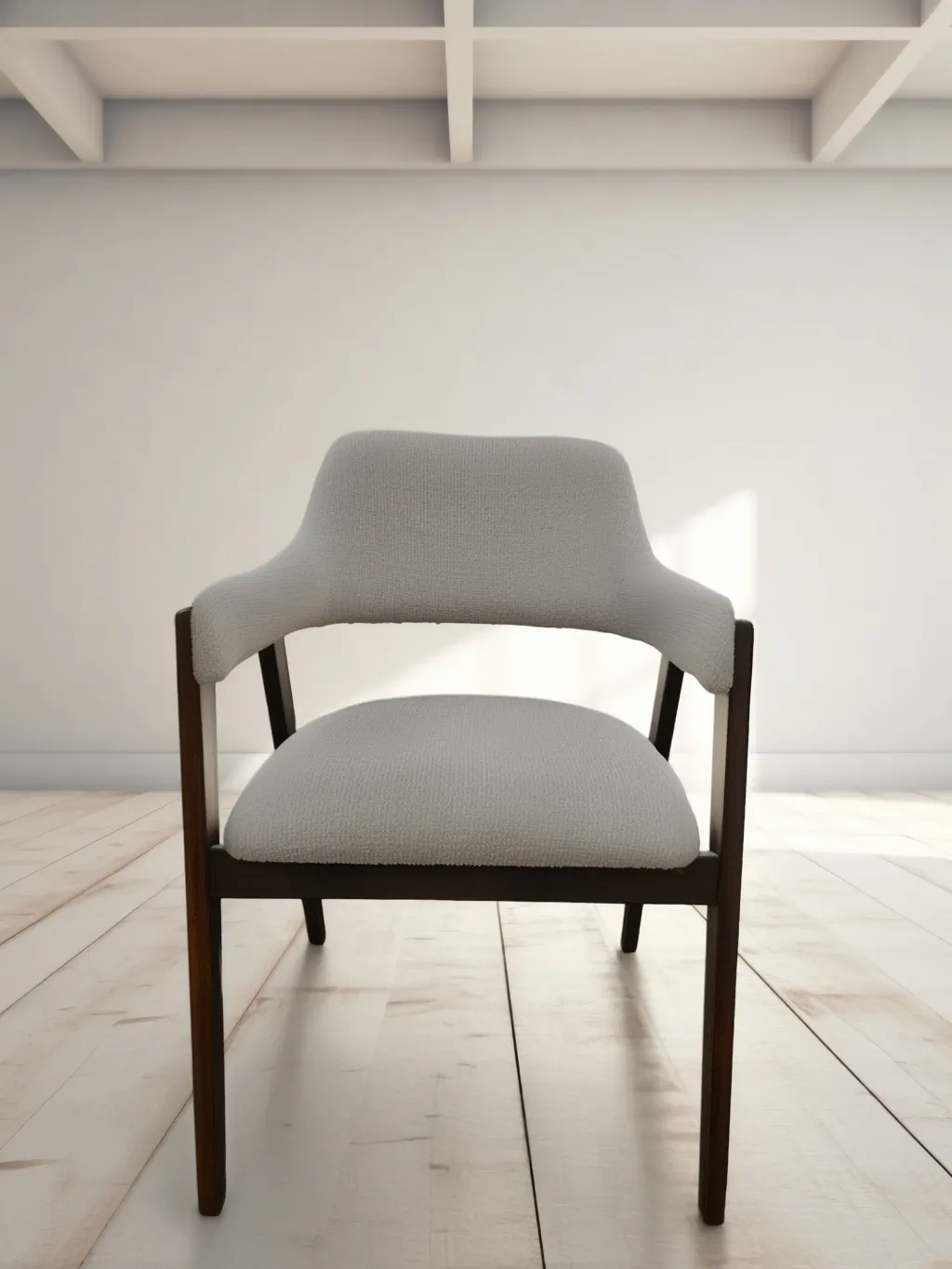
The Zara chair exemplifies the 2026 biophilic bistro ethos. Its frame is crafted from steam-bent European beech, with a 20 mm thick seat panel veneered in European oak. The backrest features a continuous curve that cradles the lumbar spine, achieved through a three-stage CNC bending process. Upholstery options include a 420 GSM linen-polyester blend in earthy tones, with a double-stitched seam that resists unraveling under 5,000 N of tension. The chair nests at a 15-degree angle, saving 40% storage space. Weight: 6.8 kg. Load capacity: 200 kg.
Case Study: The Elite Chair
The Elite chair is designed for the intersection of luxury and durability. Its seat is a 25 mm thick walnut veneer plywood, CNC-routed with a subtle ergonomic dish. The backrest is a single piece of steam-bent European oak, connected to the seat via a hidden steel bracket rated for 300,000 cycles. Upholstery uses a 100,000 Martindale fabric with a 60 kg/m³ foam core. The chair passes the EN 16139:2013 stability test with a 10-degree tilt without tipping. Weight: 7.2 kg. Stackable up to 6 high.
Case Study: The Pieno Chair
The Pieno chair prioritizes comfort without compromising sustainability. Its frame is constructed from FSC-certified birch plywood, with a 30 mm thick seat cushion using a dual-density foam system: 50 kg/m³ base and 40 kg/m³ top layer. The backrest is fully upholstered with a 380 GSM recycled polyester fabric, channel-stitched to prevent foam shifting. The chair is designed for easy disassembly—all screws are 4 mm hex-drive, allowing full breakdown in under 3 minutes. Weight: 9.4 kg. Load capacity: 180 kg.
Sourcing Strategy for High-Traffic Venues
When sourcing furniture for a high-traffic bistro, consider the following technical criteria:
- Cycle Testing: Ensure all seating passes EN 16139:2013 or ANSI/BIFMA X5.1 for 100,000 cycles.
- Material Traceability: Request FSC chain-of-custody certificates for all wood components.
- Repairability: Specify designs that allow replacement of individual parts (e.g., seat covers, foam inserts) without discarding the frame.
- Nesting Efficiency: Chairs that nest reduce shipping volume by 30–50%, lowering your carbon footprint and logistics costs.
- Finish Durability: Hard-wax oil finishes are preferred over lacquers for ease of spot repair.
Our factory in Turkey offers a unique advantage: proximity to European raw materials and lower labor costs without compromising on CNC precision. We export to 40+ countries, with lead times of 8–12 weeks for custom orders. Visit our product catalog for full specifications, or contact our team for bulk pricing and material samples.
Key Takeaways
- Wood Species: European oak, beech, and walnut are the preferred species for high-traffic biophilic bistro furniture, with Janka hardness ratings above 1,000 lbf.
- CNC Tolerances: ±0.1 mm to ±0.2 mm precision ensures seamless joinery and nesting compatibility.
- Foam Density: 50–60 kg/m³ cold-cure polyurethane foam with CertiPUR-US certification is essential for contract longevity.
- Fabric GSM: 380–420 GSM linen-polyester blends with Martindale ≥100,000 rubs are the industry standard for 2026.
- Sustainability: FSC certification, hard-wax oil finishes, and tool-free disassembly are non-negotiable for true biophilic sourcing.
- Testing: Always verify EN 16139:2013 compliance for seating and BIFMA X5.1 for tables in high-traffic environments.
FAQ
What wood species are best for high-traffic bistro chairs in 2026?
European oak (Quercus robur) and European beech (Fagus sylvatica) are the top choices due to their high Janka hardness (1,360 lbf and 1,450 lbf, respectively) and steam-bending capabilities. For accent pieces, American black walnut offers a striking aesthetic with adequate durability. All wood should be FSC-certified and kiln-dried to 8–10% moisture content to prevent warping in commercial environments.
How do I verify the sustainability of imported European furniture?
Request FSC chain-of-custody documentation for all wood components, CertiPUR-US certification for foams, and OEKO-TEX Standard 100 for fabrics. Additionally, ask for a life-cycle assessment (LCA) report if available. Reputable manufacturers will provide material data sheets and third-party test results for EN or BIFMA standards. You can also visit our about page to learn about our sustainability practices.
What is the typical lead time for custom biophilic bistro furniture orders?
For standard models like the Zara, Elite, or Pieno chairs, lead times range from 6–8 weeks for stock fabrics and finishes. Custom upholstery, wood stains, or dimensions add 2–4 weeks. Bulk orders (100+ units) may qualify for reduced lead times of 8–10 weeks. We recommend ordering samples and visiting our wholesale page to initiate a project consultation.