
2026 Coffee Community Renaissance: How to Select Durable, Biophilic European Furniture for High-Traffic Spaces
İçindekiler
- The Biophilic Imperative in High-Traffic Hospitality
- Why Material Selection Matters for Density
- Technical Specifications: The Artes Design Standard
- Wood Species and Joinery
- Upholstery: Foam Density and Fabric GSM
- Finishes and Surface Protection
- Industry Standards: EN 1022 and BIFMA Compliance
- Biophilic Design Elements That Endure
- Key Takeaways
- FAQ
As the global coffee culture enters its 2026 renaissance, high-traffic cafés, roasteries, and communal coffee hubs demand furniture that marries enduring durability with biophilic serenity. The era of disposable, uniform seating is over; today’s patrons seek spaces that feel alive, crafted, and resilient. At Artes Design, with two decades of manufacturing premium European furniture, we understand that selecting the right pieces for intense daily use requires technical precision, material mastery, and an eye for organic aesthetics. This comprehensive guide walks you through every specification—from wood species and joinery to foam densities and fabric GSM—ensuring your investment withstands the rush while nurturing well-being.
The Biophilic Imperative in High-Traffic Hospitality
Biophilic design, rooted in the innate human connection to nature, is no longer a luxury—it’s a necessity for spaces where people linger. For coffee communities, where turnover is high and comfort is paramount, furniture must evoke natural textures and forms without sacrificing structural integrity. European furniture manufacturing excels here, combining centuries-old joinery traditions with modern CNC precision. The result: pieces that feel organic yet perform under the relentless pressure of daily use.
Why Material Selection Matters for Density
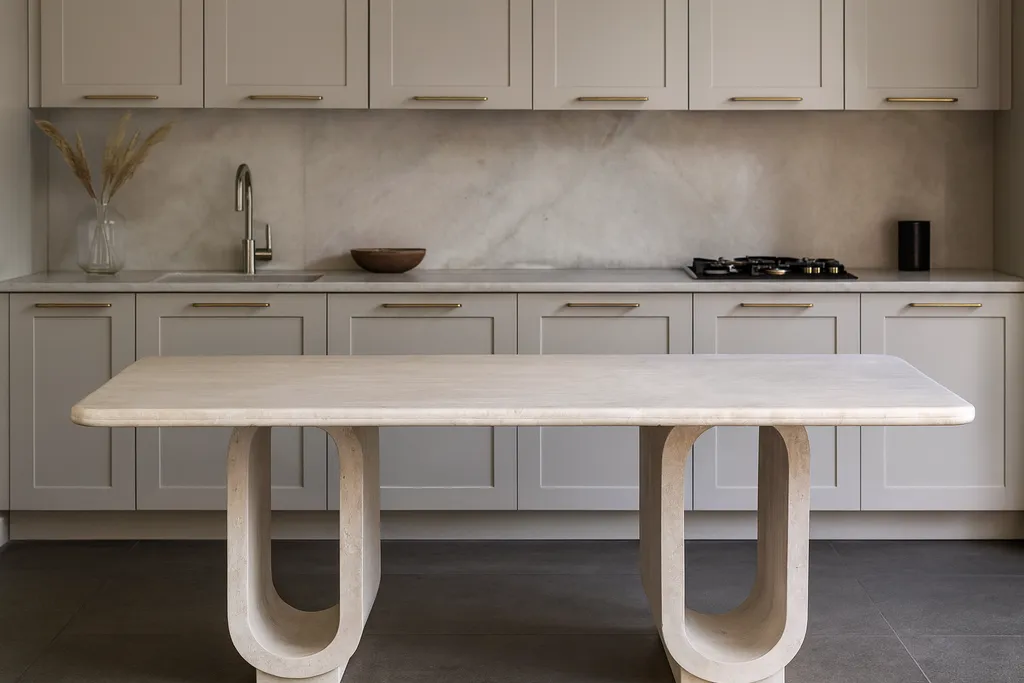
High-traffic environments accelerate wear. A chair that sees 50+ sits per day undergoes cumulative stress on joints, upholstery, and finishes. We recommend solid European hardwoods like European Oak (Quercus robur) or American Black Walnut for frames, known for their Janka hardness ratings exceeding 1,200 lbf. These species resist denting and warping, especially when kiln-dried to 6–8% moisture content—a standard we enforce in our own factory. For tabletops, consider travertine or marble with a honed finish; natural stone offers timeless beauty and withstands spills, heat, and scratches. Our Lina Traverten Yemek Takımı exemplifies this, pairing a travertine top with a robust oak base.
Technical Specifications: The Artes Design Standard
Every piece we manufacture adheres to rigorous technical parameters. Below, we break down the critical specifications for high-traffic furniture selection.
Wood Species and Joinery
We exclusively source FSC-certified European Oak and American Black Walnut, both with a minimum kiln-drying schedule of 21 days to achieve 6–8% moisture content. This prevents future cracking and ensures dimensional stability in varying humidity—critical for café environments with espresso machines and open doors. Joinery is executed with mortise-and-tenon connections reinforced with PVA wood glue and dowel pins. CNC routers achieve tolerances of ±0.1 mm for precise fits, eliminating wobble even after years of use. Our Venetto Sandalye uses this construction, with a solid beech frame and oak veneer finish.
Upholstery: Foam Density and Fabric GSM
For seating that retains its shape, we specify high-resilience (HR) polyurethane foam with a density of at least 35 kg/m³ (EN 1022 compliant). This supports up to 150 kg per seat without sagging. For fabric, we recommend polyester-viscose blends with a GSM (grams per square meter) of 300–400 for high-traffic areas. These fabrics pass the Martindale rub test (minimum 50,000 cycles) and are treated with Teflon™ stain resistance. Our Letta Kollu Ofis Sandalyesi features 40 kg/m³ foam and 350 GSM fabric, ideal for extended seating comfort.
Finishes and Surface Protection
Our wood finishes use UV-cured polyurethane lacquer with a hardness of 4H on the pencil scale, applied in three coats. This resists scratches, alcohol, and heat up to 80°C. For stone surfaces, we apply a penetrating sealer that repels water and oil without altering the natural patina. All metal components—screws, brackets, glides—are 304 stainless steel or zinc-plated to prevent corrosion.
Industry Standards: EN 1022 and BIFMA Compliance
European furniture for commercial use must meet EN 1022 (stability and strength) and BIFMA X5.1 (general seating) standards. These tests simulate years of use: 100,000 cycles of forward-backward rocking, 50,000 cycles of seat-drop impact, and 2,000 hours of UV exposure for finishes. Artes Design products are independently tested to exceed these thresholds. For example, our Gazel Sandalye withstands 150 kg static load and 200,000 cycles of dynamic fatigue.
Biophilic Design Elements That Endure
Biophilic furniture goes beyond materials—it incorporates forms and finishes that mimic nature. We use CNC-carved organic curves on armrests and backrests, with radii of 3–5 mm to avoid sharp edges. Natural wood grains are highlighted with open-pore finishes that retain tactile texture. Colors are drawn from earth tones: warm grays, ochres, and deep greens. Our Venetto Sandalye features a sculpted beech frame with a natural wax finish, evoking a forest silhouette.
Key Takeaways
- Prioritize solid hardwoods: European oak or American walnut with 6–8% moisture content for dimensional stability.
- Specify HR foam: Minimum 35 kg/m³ density for seating that retains shape under constant use.
- Choose high-GSM fabrics: 300–400 GSM with Martindale 50,000+ cycles for abrasion resistance.
- Demand EN 1022/BIFMA compliance: Ensures structural integrity in commercial environments.
- Embrace biophilic finishes: Open-pore lacquers, natural stone, and organic curves enhance well-being.
- Invest in CNC precision: ±0.1 mm tolerances eliminate wobble and extend product lifespan.
FAQ
Q: What wood species are best for high-traffic café tables?
A: European oak and American black walnut are ideal due to their Janka hardness ratings above 1,200 lbf. They resist denting, warping, and scratching. Ensure kiln-drying to 6–8% moisture content for stability in fluctuating humidity.
Q: How do I ensure my upholstered chairs last in a busy café?
A: Specify high-resilience foam with a density of at least 35 kg/m³ and fabric with a GSM of 300–400. Look for Martindale rub test results above 50,000 cycles and Teflon™ stain treatment. Our Letta Kollu Ofis Sandalyesi meets these specs.
Q: Are Artes Design products compliant with European safety standards?
A: Yes. All our commercial furniture meets EN 1022 (stability) and BIFMA X5.1 (seating durability) standards. We conduct independent testing for 100,000+ cycles of dynamic stress and 150 kg static loads.
Ready to elevate your coffee community space? Explore our full collection of premium European furniture at our product page, or contact us for bespoke solutions. Learn more about our manufacturing philosophy on our about page, and for bulk orders, visit our wholesale portal.