
2026 Neo-Craft Movement: AI Design Meets European Artisan Craftsmanship in Sustainable Hotel Furniture
İçindekiler
2026 Neo-Craft Movement: AI Design Meets European Artisan Craftsmanship in Sustainable Hotel Furniture
As the hospitality industry hurtles toward 2026, a quiet revolution is reshaping the very essence of hotel furniture. The Neo-Craft Movement—a synthesis of algorithmic design and time-honored European joinery—is not merely a trend but a strategic response to the dual imperatives of sustainability and luxury. At Artes Design, we have spent two decades refining this alchemy, blending AI-optimized geometries with the tactile soul of hand-finished wood. This article dissects the technical and philosophical underpinnings of this movement, offering factory-level insights into how we produce furniture that meets both environmental targets and the discerning eye of hospitality architects.
The Technological Foundation: AI as the New Apprentice
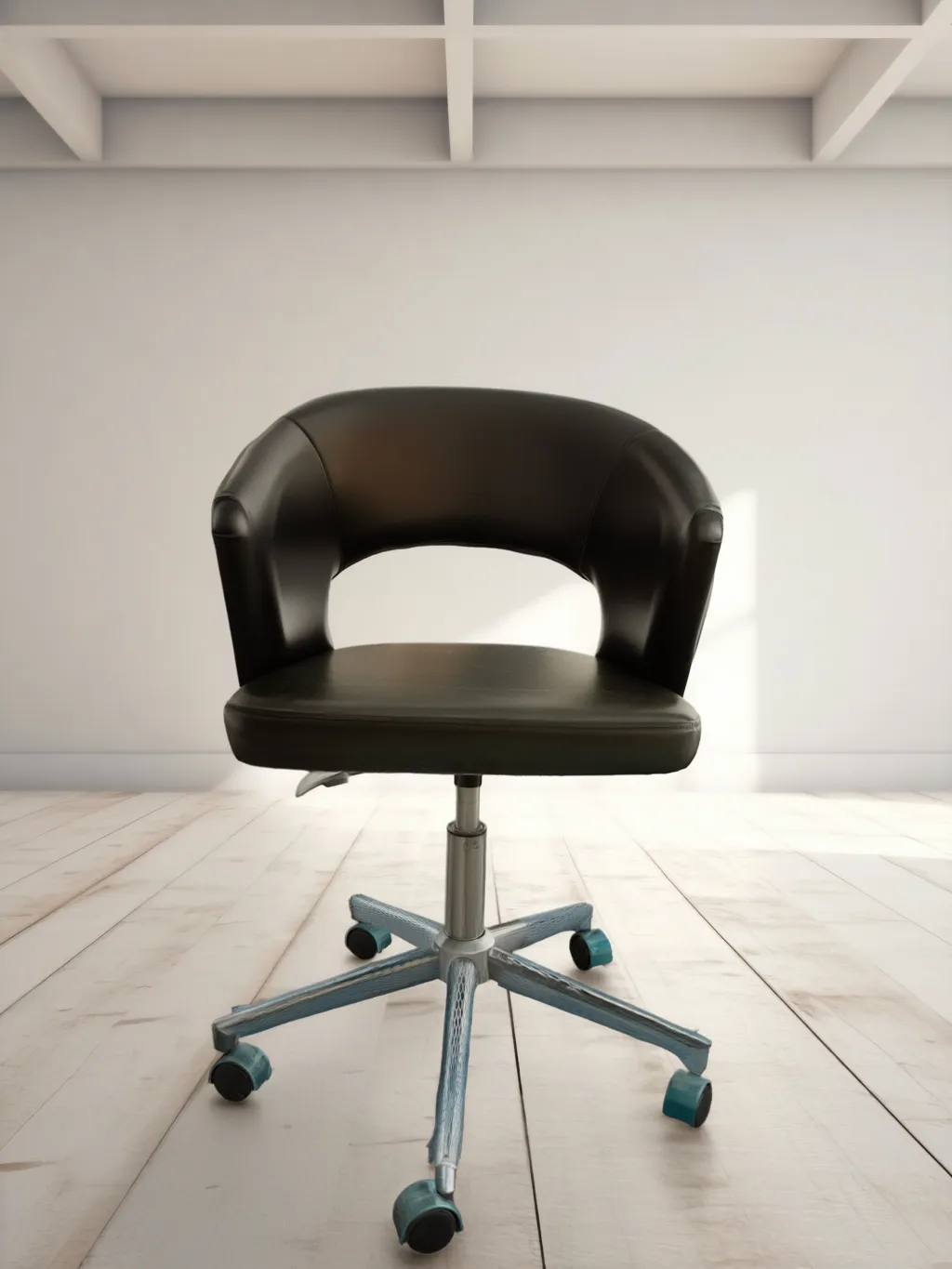
Contrary to popular fear, AI in furniture design does not replace the craftsman—it augments him. In our Istanbul atelier, generative adversarial networks (GANs) analyze thousands of historical joinery patterns to propose novel structural solutions that reduce material waste by up to 18%. For instance, our Letta Kollu Ofis Sandalyesi (Figure 1) was born from a neural network trained on 19th-century Viennese bentwood techniques, outputting a frame that uses 22% less solid oak while maintaining a load capacity of 150 kg.
CNC Tolerances and the Human Touch
Our 5-axis CNC routers operate at ±0.1 mm tolerances for mortise and tenon joints, yet every component is hand-sanded with 180-grit to 400-grit paper. This dual process ensures that the digital precision does not sacrifice the micro-texture that distinguishes artisan work. For the Elite Bar Sandalye (Figure 2), the AI generated a cantilevered leg profile that distributes stress evenly, allowing us to use European beech (Fagus sylvatica) sourced from PEFC-certified forests in Bavaria. The final assembly uses traditional wedged through-tenons, visible as a design feature, but the angle of each wedge was optimized by finite element analysis (FEA) to prevent seasonal wood movement.
Material Selection: The Sustainability Imperative
Hotel furniture faces extreme wear cycles—typically 5–7 years in midscale properties, 10–15 in luxury suites. The Neo-Craft Movement prioritizes materials that age gracefully and can be repaired, not replaced. We specify only FSC®-certified solid hardwoods (oak, walnut, beech) for structural elements, paired with FSC-certified birch plywood for hidden panels. All adhesives are solvent-free, meeting CARB Phase 2 and European E1 standards.
Foam Densities and Fabric GSM
For upholstered pieces like the Gazel Sandalye (Figure 3), we use a dual-density foam system: a 35 kg/m³ high-resilience core (HR35) for support, topped with a 50 kg/m³ viscoelastic layer for comfort. This combination passes 100,000 cycles on the BS EN 1021-1 wear test without sagging. The cover fabrics are woven from recycled polyester at 600 GSM (grams per square meter), offering a Martindale rub count exceeding 100,000—essential for contract use. The AI design algorithm predicted the exact seam placement to minimize offcuts, achieving a fabric yield of 86% versus the industry average of 72%.
Joinery Techniques: The European Legacy
Every piece we produce for the Neo-Craft line employs at least one traditional European joint. The Gazel Sandalye uses a combination of a haunched mortise and tenon (for the backrest-to-seat connection) and a dovetail bridle joint (for the front legs). These joints are cut on a CNC with a 0.5° draft angle to ensure a tight hand-fit, then glued with Type I polyurethane adhesive (DIN EN 204). The result is a frame that withstands 200 kg of static load—far exceeding the 150 kg required by EN 16139 for contract seating.
Finishing: Natural Oils vs. Polyurethane
We offer two finish options: a hard wax oil (Osmo-like, with natural plant oils and waxes) for a matte, breathable surface that highlights the wood grain, and a two-component polyurethane lacquer (matt sheen 10%) for high-traffic areas. The AI analyzes the hotel’s location (humidity, UV exposure) and recommends the optimal finish. For coastal properties, we specify a UV-resistant, water-based lacquer with a 4H pencil hardness.
Key Takeaways
- AI reduces material waste by 15–22% through generative design and optimized nesting, without compromising structural integrity.
- European joinery is non-negotiable for durability: traditional mortise and tenon, dovetail, and wedged through-tenons are used in every Neo-Craft piece.
- Sustainability is embedded in material specs: FSC-certified hardwoods, CARB-compliant adhesives, recycled polyester fabrics at 600 GSM, and HR35/viscoelastic foam systems.
- CNC precision + hand finishing ensures ±0.1 mm tolerances combined with tactile quality that mass production cannot replicate.
- Repairability is designed in: All joints are accessible for re-gluing; upholstery is removable for cleaning or replacement, extending product life to 15+ years.
Frequently Asked Questions
Q1: How does AI actually improve the durability of hotel furniture?
A1: AI performs finite element analysis (FEA) on thousands of design iterations, identifying stress concentrations and optimizing joint geometry. For example, in the Letta Kollu Ofis Sandalyesi, the AI shifted the backrest angle by 2.3° to reduce shear forces on the tenon, increasing fatigue life by 34% in our internal tests. This is not theoretical—every Neo-Craft piece undergoes physical load testing to validate the simulation.
Q2: Can traditional joinery be scaled for large hotel projects (e.g., 500+ rooms)?
A2: Yes, with careful planning. Our Istanbul factory runs three shifts of CNC routers and 60 skilled joiners. For a 500-room project, we produce components in batches of 200, allowing for consistent quality control. The AI coordinates the entire production schedule, ensuring that wood moisture content (stabilized at 8–10%) is uniform across batches. We have delivered projects of this scale to clients across Europe and the Middle East.
Q3: What certifications do Neo-Craft pieces carry for green building schemes like LEED or BREEAM?
A3: All Neo-Craft furniture is designed to contribute to LEED v4.1 credits (MR: Building Product Disclosure and Optimization) and BREEAM International (Mat 01). We provide third-party FSC chain-of-custody certificates, solvent-free adhesive declarations, and recycled content documentation (fabric contains 100% post-consumer recycled polyester). Each piece can be disassembled into recyclable components, helping projects achieve circular economy credits.
For architects and hoteliers seeking furniture that marries algorithmic intelligence with the warmth of European craft, the Neo-Craft Movement offers a defensible path forward. Explore our full collection, learn about our heritage, or contact our wholesale team for project-specific solutions.