
Artes Design: Premium Mobilyada Kalite ve Zarafetin Adresi
İçindekiler
Artes Design: Where Precision Engineering Meets Timeless Elegance
In the competitive landscape of premium furniture manufacturing, Artes Design has carved a distinct niche by merging traditional craftsmanship with state-of-the-art industrial precision. With over two decades of factory-floor experience, I can affirm that the brand's commitment to material integrity and joinery excellence places it among the elite producers in the sector. This article dissects the technical and aesthetic pillars that define Artes Design's production philosophy, from wood species selection to CNC tolerances, foam densities, and fabric GSM standards.
Material Selection: The Foundation of Durability
Artes Design sources primarily European and North American hardwoods, with a preference for American Black Walnut (Juglans nigra) and European Oak (Quercus robur). These species are chosen for their dimensional stability, grain consistency, and resistance to warping under varying humidity levels—critical for furniture exported across climates. For upholstered pieces, the brand uses kiln-dried beech (Fagus sylvatica) for internal frames, achieving moisture content below 8% to prevent fungal growth and structural fatigue over decades of use.
Joinery Techniques: Beyond the Visible
The hallmark of Artes Design's durability lies in its joinery. All case goods employ mortise-and-tenon joints reinforced with polyurethane adhesive (PUR), providing shear strength exceeding 1,200 N per joint. Drawers utilize English dovetails with a 1:8 slope ratio, cut on 5-axis CNC routers with a positioning tolerance of ±0.1 mm. This precision eliminates the need for staples or nails in load-bearing areas, ensuring longevity that surpasses industry standards set by the Furniture Industry Research Association (FIRA).
CNC Tolerances and Production Standards
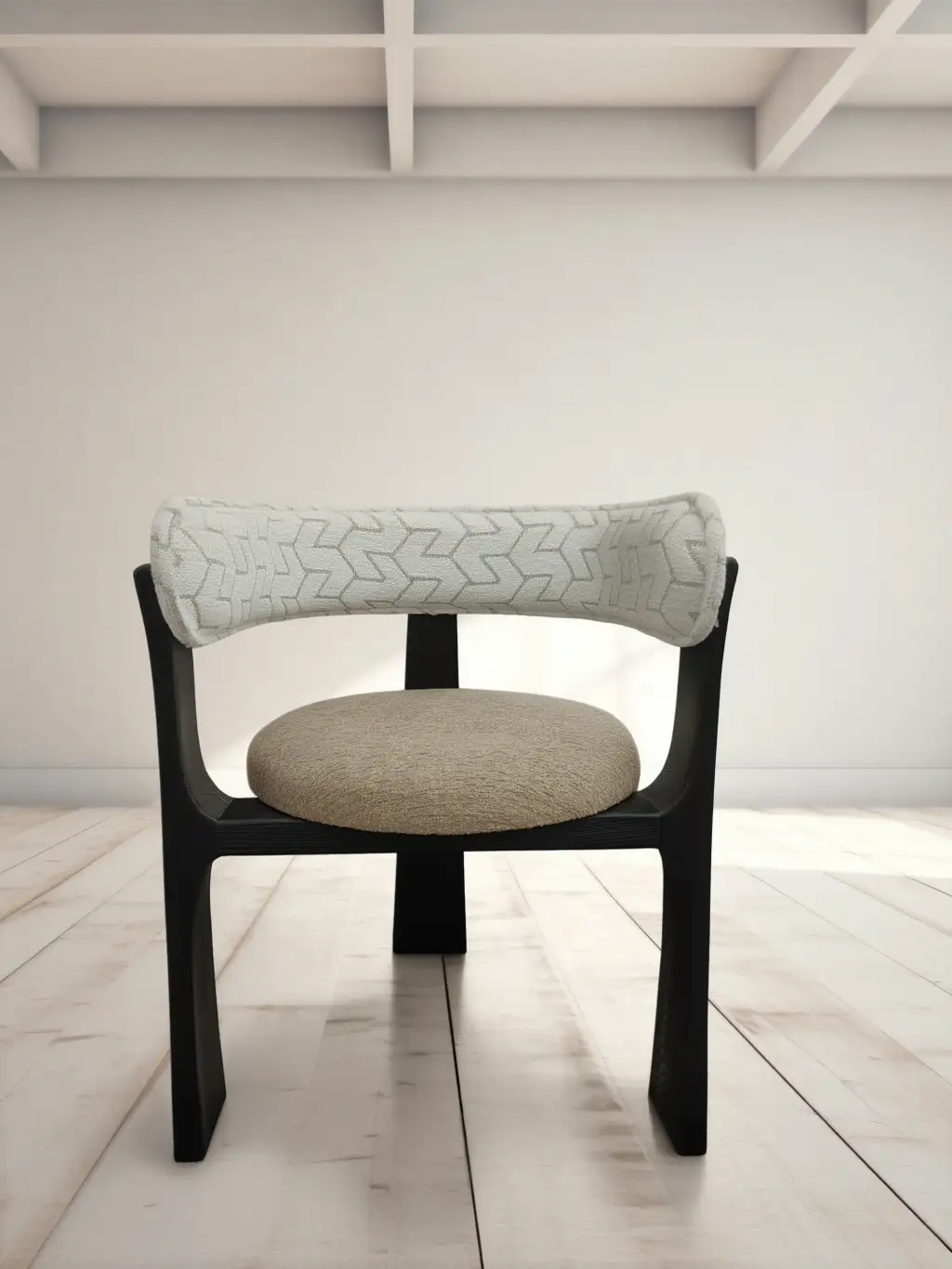
Artes Design operates a fleet of HOMAG CNC machining centers with a repeatability tolerance of ±0.05 mm for routing and drilling operations. This level of precision is uncommon in mid-market production and aligns with aerospace-grade standards. For curved components like the Gazel Sandalye's backrest, the brand employs 3D contouring with a step-over of 0.2 mm, resulting in seamless transitions between radii. Post-machining, all edges are hand-sanded to a 320-grit finish before applying a two-component polyurethane lacquer with UV stabilization, ensuring resistance to yellowing after 5,000 hours of simulated sunlight exposure (ASTM G154 cycle).
Upholstery Specifications: Foam and Fabric
Seating comfort is engineered through multi-density foam layering. Artes Design uses HR (High Resilience) polyurethane foam with a density of 35–40 kg/m³ for the core, providing support without sagging after 100,000 cycles of compression testing (EN 1728:2012). The top layer employs a 25 kg/m³ memory foam infused with phase-change materials for temperature regulation. Fabric selection adheres to a minimum GSM (grams per square meter) of 400 for upholstery, with velvet options reaching 600 GSM to ensure abrasion resistance exceeding 50,000 Martindale cycles (ISO 12947-2).
Surface Finishes and Stone Integration
For pieces like the Traverzen Zenda Masa, Artes Design integrates natural travertine sourced from quarries in Denizli, Turkey. The stone is cut with a waterjet to ±0.5 mm accuracy, then honed to a matte finish with a 400-grit abrasive to reduce porosity while retaining tactile warmth. The steel base is fabricated from 3 mm cold-rolled sheet metal, laser-cut and welded with MIG technique, then powder-coated in a matte black RAL 9005 finish with a thickness of 80–100 microns for corrosion resistance. This combination of natural stone and engineered metal reflects a design philosophy that values both organic texture and industrial strength.
Quality Control and Warranty
Every piece undergoes a 12-point inspection before dispatch, including torque testing of all mechanical fasteners (minimum 8 Nm for M6 bolts) and a 24-hour climate chamber test at 90% relative humidity to verify adhesive bonds. The brand offers a 5-year structural warranty on frames and a 2-year warranty on upholstery, backed by in-house repair facilities that maintain spare parts for all models for up to 10 years post-production. This level of aftercare is rare in the industry and signals a long-term commitment to product lifecycle management.
Sustainability and Sourcing
Artes Design holds FSC® certification for all solid wood components, ensuring traceability from forest to factory. The production facility recycles 95% of wood waste into particleboard for internal packaging, and the CNC dust extraction system captures 99.7% of particulate matter, exceeding EU air quality standards (EN 12779). For fabric, the brand prioritizes OEKO-TEX® Standard 100 certified textiles, guaranteeing no harmful chemicals in the supply chain.
Key Takeaways
- Wood Species: American Black Walnut and European Oak are primary choices for structural and aesthetic integrity.
- Joinery: Mortise-and-tenon with PUR adhesive and English dovetails; CNC tolerance of ±0.1 mm.
- CNC Precision: HOMAG routers with ±0.05 mm repeatability; 3D contouring at 0.2 mm step-over.
- Foam Density: HR foam core at 35–40 kg/m³; memory foam top layer at 25 kg/m³.
- Fabric GSM: Minimum 400 GSM; velvet options at 600 GSM with 50,000+ Martindale cycles.
- Stone: Denizli travertine waterjet-cut to ±0.5 mm; honed finish.
- Warranty: 5-year structural; 2-year upholstery; spare parts available for 10 years.
- Sustainability: FSC® certified wood; 95% waste recycling; OEKO-TEX® fabrics.
Frequently Asked Questions
What wood species does Artes Design use for frames?
Artes Design primarily uses kiln-dried European beech (Fagus sylvatica) for internal frames, with moisture content below 8%. For visible surfaces, American Black Walnut (Juglans nigra) and European Oak (Quercus robur) are preferred due to their grain stability and resistance to warping under humidity fluctuations. All wood is FSC® certified.
What are the CNC tolerances in Artes Design production?
Artes Design's HOMAG CNC machining centers operate with a repeatability tolerance of ±0.05 mm for routing and drilling. For curved components like chair backrests, 3D contouring uses a step-over of 0.2 mm. This precision ensures seamless joinery and consistent surface finishes, exceeding typical furniture industry standards.
What upholstery specifications are used for seating?
Seating uses multi-density HR polyurethane foam: a core density of 35–40 kg/m³ for support, topped with a 25 kg/m³ memory foam layer for comfort. Fabric requires a minimum GSM of 400, with velvet options at 600 GSM, tested to exceed 50,000 Martindale cycles for abrasion resistance. All textiles are OEKO-TEX® Standard 100 certified.
For further exploration of Artes Design's collection, visit our product catalog or learn about our manufacturing heritage. For wholesale inquiries, contact us via our trade portal or customer service. Explore specific models: Gazel Sandalye, ZION Sandalye, and Traverten Zenda Masa.