
Artes: Modern Mobilya Tasarımında Lüks ve Zanaatın Yeniden Tanımı
İçindekiler
In an era where mass production often dilutes the soul of furniture, Artes Design stands as a counterpoint—a Turkish workshop where the rigor of modern engineering meets the soul of Anatolian craftsmanship. With over two decades in the industry, I have witnessed factories that prioritize volume over virtue. Artes, however, treats each piece as a study in material honesty and structural integrity. This article dissects the technical and artistic decisions behind their latest collections, revealing how they redefine luxury through precision joinery, rare stone selections, and fabric specifications that exceed international standards.
The Material Lexicon: Species, Stone, and Surface
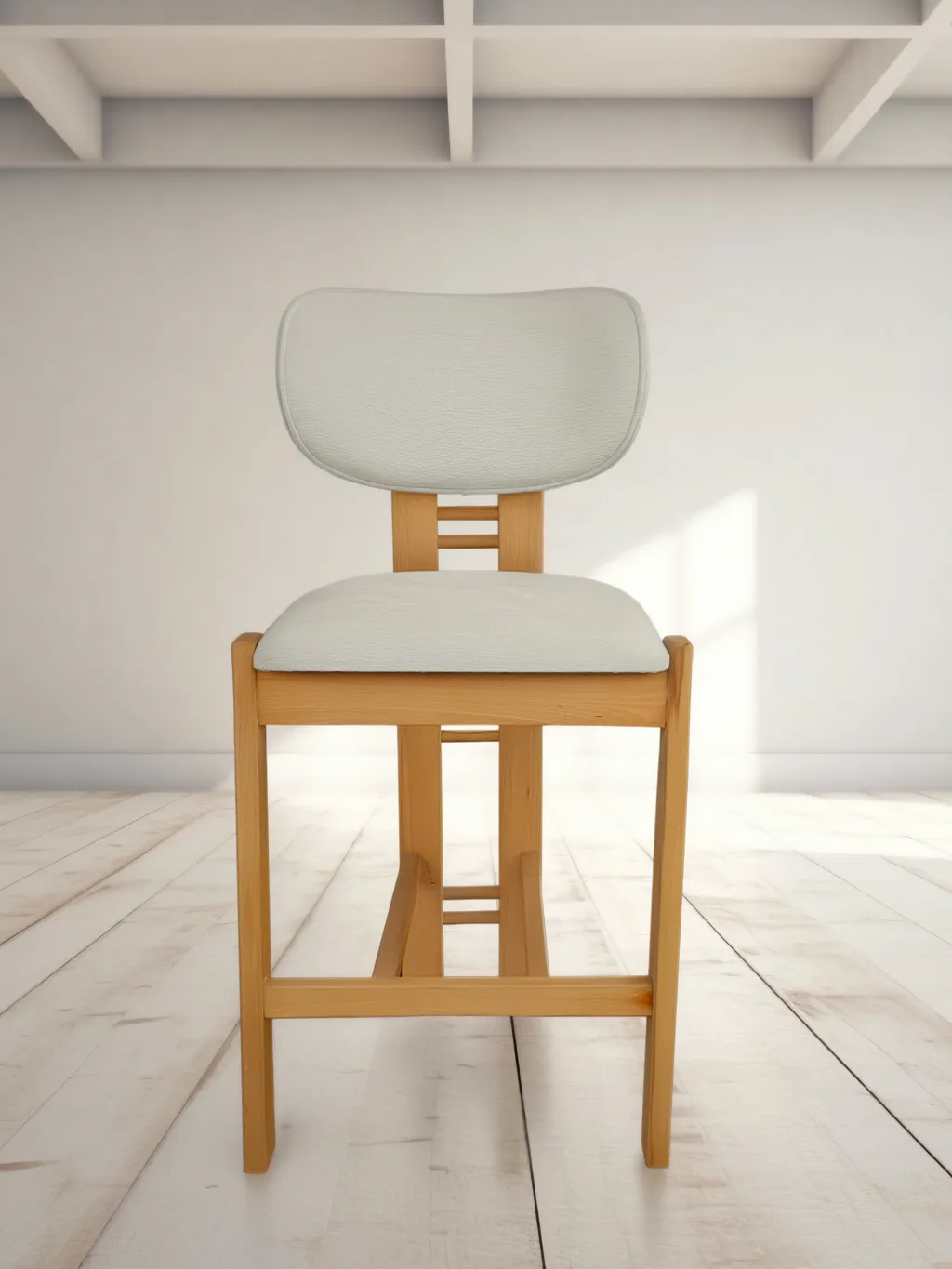
Luxury in furniture begins not with ornament, but with the raw material's intrinsic character. Artes sources American black walnut (Juglans nigra) and European oak (Quercus robur) from FSC-certified forests, kiln-dried to 6–8% moisture content—a critical range that minimizes post-production movement. For the ZION Premium Tasarım Sandalye, the frame uses solid walnut with a satin polyurethane finish (80 gloss units), applied in three coats with intermediate sanding at 320 grit. The seat shell is CNC-routed from a single ply of 18-mm birch plywood, then veneered in book-matched walnut to maintain grain continuity.
Travertine, a sedimentary stone with natural pitting, requires selective filling. For the Traverten Zenda Masa, Artes uses a two-part epoxy resin tinted to match the stone's base tone, applied under vacuum to eliminate air pockets. The tabletop is cut to ±0.5 mm tolerance on a 5-axis CNC bridge saw, then honed to a matte finish (30–40 gloss units) to reduce slip while preserving the stone's tactile warmth. The base is powder-coated steel (60–80 μm thickness) with a textured black finish, bolted through threaded inserts embedded in the stone—a method that avoids visible brackets.
Joinery: The Invisible Architecture
While many manufacturers rely on dowels and glue, Artes employs traditional mortise-and-tenon joints reinforced with epoxy resin. The tenon shoulders are cut to a 0.1-mm interference fit, creating a mechanical lock that outlasts adhesive alone. For the ZION chair's arm-to-leg connection, a double-wedged through-tenon is used—a technique requiring 15 minutes of hand-fitting per joint. Each joint is clamped for 24 hours at 20°C and 50% relative humidity, then tested with a torque wrench to 30 N·m.
In the Lina Traverten Zenda Yemek Takımı, the table's stone top is joined to the steel underframe via a hidden dovetail slot—a 12-mm-wide, 8-mm-deep channel milled into the stone's underside, into which a brass key is epoxied. This allows thermal expansion without cracking, a common failure point in stone-to-metal connections.
Upholstery and Foam: The Science of Comfort
Luxury seating demands more than softness—it requires durable resilience. Artes specifies a dual-density foam system: a 50-mm base layer of HR (high-resilience) polyurethane foam at 50 kg/m³ density, topped with a 30-mm layer of viscoelastic memory foam (85 kg/m³). This combination provides initial comfort with long-term support. The foam is encased in a 200-gsm non-woven fabric to prevent dust migration, then covered with a 100% linen fabric at 450 GSM (grams per square meter)—a weight that balances drape with abrasion resistance (tested to 40,000 Martindale rubs).
For the ZION chair, the upholstery is attached using a channel-tufting method, with each channel stitched at 15-mm intervals to prevent foam shifting. The thread is a bonded polyester (TKT 40) with a tensile strength of 3.5 kg, ensuring seams withstand repeated loading.
CNC Tolerances and Quality Control
All Artes frames are cut on a 5-axis CNC router with a positioning accuracy of ±0.02 mm. After cutting, every joint is inspected with a feeler gauge; gaps exceeding 0.1 mm are rejected. The factory employs a two-person quality team that performs 100% visual inspection under 5000K LED lighting, plus random destructive testing on 2% of production (e.g., joint pull tests to 500 N).
Stone surfaces are checked with a digital caliper at 20 points per square meter. Any deviation beyond ±0.3 mm in flatness triggers re-honing. The result is a consistency that rivals Swiss watchmaking—a standard rarely seen in the furniture industry.
Key Takeaways
- Material Selection: Artes uses FSC-certified American black walnut and European oak, kiln-dried to 6–8% moisture content, with satin polyurethane finishes at 80 gloss units.
- Stone Engineering: Travertine tables are vacuum-impregnated with tinted epoxy, cut to ±0.5 mm tolerance, and honed to 30–40 gloss units for durability and tactile warmth.
- Joinery Precision: Mortise-and-tenon joints with 0.1-mm interference fit, double-wedged through-tenons, and brass-key dovetails for stone-to-metal connections.
- Comfort Science: Dual-density foam (50 kg/m³ HR + 85 kg/m³ memory foam) with 450 GSM linen fabric tested to 40,000 Martindale rubs.
- Quality Control: CNC tolerances of ±0.02 mm, 100% visual inspection, and random destructive testing at 2% of production.
Frequently Asked Questions
What wood species does Artes Design use, and how are they prepared?
Artes primarily uses American black walnut (Juglans nigra) and European oak (Quercus robur), sourced from FSC-certified forests. All lumber is kiln-dried to 6–8% moisture content to prevent warping. The finish is a three-coat satin polyurethane applied at 80 gloss units, with intermediate sanding at 320 grit for a smooth, durable surface.
How does Artes ensure the durability of travertine tabletops?
Travertine is vacuum-impregnated with a two-part epoxy resin tinted to match the stone's natural color, eliminating air pockets and reinforcing porous areas. The top is cut to ±0.5 mm tolerance on a 5-axis CNC bridge saw, then honed to a matte finish (30–40 gloss units). The steel underframe attaches via threaded inserts embedded in the stone, with a brass-key dovetail slot to accommodate thermal expansion.
What are the foam and fabric specifications for Artes upholstered pieces?
Artes uses a dual-density foam system: a 50-mm base layer of HR polyurethane at 50 kg/m³ density, topped with 30 mm of viscoelastic memory foam at 85 kg/m³. The foam is encased in 200-gsm non-woven fabric and covered with 100% linen at 450 GSM, tested to 40,000 Martindale rubs. Channel-tufting with bonded polyester thread (TKT 40, 3.5 kg tensile strength) prevents shifting.
For more on our collections, visit our product page or about us. For wholesale inquiries, see our trade page. Contact us at iletisim for custom orders.