
Artes: Redefining Luxury and Craftsmanship in Premium Furniture Design
İçindekiler
- Introduction: The Artes Approach to Material Integrity
- Travertine as a Structural Medium: Engineering the Zenda Table
- The Traverten Masa: Upholstery Meets Stone
- The Zara Traverten Dining Set: Systematizing Modular Luxury
- Technical Specifications: The Numbers Behind the Craft
- Wood Species and Moisture Management
- CNC Tolerances and Finishing
- Foam and Fabric Standards
- Joinery Techniques: Beyond the Visible
- Key Takeaways
- FAQ
- Conclusion: The Artes Standard
Introduction: The Artes Approach to Material Integrity
In the realm of premium furniture, the distinction between mass-produced commodity and heirloom-quality investment lies in the fidelity to material science and joinery heritage. Artes Design, operating from our 12,000-square-meter production facility in Istanbul, has established a rigorous protocol that begins not with sketches, but with raw material sourcing. Our philosophy rejects the disposable ethos of fast furniture; instead, we engineer pieces that withstand decades of daily use while developing a natural patina that enhances their character.
The cornerstone of our production is the selection of solid Anatolian oak (Quercus robur) and American black walnut (Juglans nigra), each plank kiln-dried to a moisture content of 6–8% to prevent warping in variable climates. For our signature travertine collections, we source exclusively from the Denizli basin in southwestern Turkey, where the stone’s cellular structure—formed by millennia of thermal spring deposition—offers a unique balance of porosity and compressive strength. Every block undergoes a 14-day stabilization period before CNC machining begins.
Travertine as a Structural Medium: Engineering the Zenda Table
The Traverten Zenda Masa exemplifies our approach to integrating natural stone with fine joinery. The tabletop is hewn from a single slab of Class A travertine, selected for its minimal fissures and consistent ivory tone. Using a 5-axis CNC router with ±0.1mm positional accuracy, we machine the underside to accept a 10mm brushed brass insert that serves as both a structural stiffener and a thermal expansion buffer. The brass is sourced from 2mm-thick 260 brass alloy (70% copper, 30% zinc), chosen for its corrosion resistance and compatibility with stone adhesives.
The base employs a modified mortise-and-tenon system: the oak legs are turned on a CNC lathe to a 45mm diameter, then hand-shaped with a spokeshave to create subtle facets that catch light. Each tenon is precisely 30mm × 20mm, fitted into a CNC-routed mortise with an interference tolerance of 0.2mm—tight enough to eliminate wobble, yet allowing for seasonal wood movement. The joint is secured with polyurethane adhesive and a single 8mm × 100mm stainless steel dowel, countersunk and capped with a matching oak plug.
The Traverten Masa: Upholstery Meets Stone
While the Traverten Masa appears to float on a delicate metal frame, the reality is a marriage of stone and upholstery engineering. The supporting substructure is a 40mm × 40mm powder-coated steel tube (2mm wall thickness), but the visible aesthetic is dominated by a leather-wrapped frame. We use full-grain Italian cowhide from a Tuscan tannery, with a thickness of 1.8–2.0mm and a finish that resists UV fading. The leather is hand-stitched with 1.2mm waxed polyester thread at 4 stitches per centimeter—a density that prevents seam failure under load.
The cushioning layer beneath the leather uses a dual-density foam system: a 30mm base of 50 kg/m³ high-resilience polyurethane foam (ILD 55) provides structural support, topped with a 15mm layer of 35 kg/m³ memory foam (ILD 25) for comfort. This combination ensures that the leather does not sag over time, even with repeated use. The foam is bonded to a 12mm plywood substrate using solvent-free neoprene adhesive, then wrapped with a 200 gsm polyester fleece before the leather is applied.
The Zara Traverten Dining Set: Systematizing Modular Luxury
The Zara Traverten Yemek Takımı represents our highest expression of modular design, where each component is engineered for interchangeability without compromising structural integrity. The tabletop is a 2000mm × 1000mm × 30mm travertine slab, CNC-profiled with a 10mm chamfer on all edges. The surface is honed to a satin finish using 800-grit diamond abrasives, then sealed with a penetrating solvent-based sealer that reduces porosity by 85% while maintaining the stone’s natural breathability.
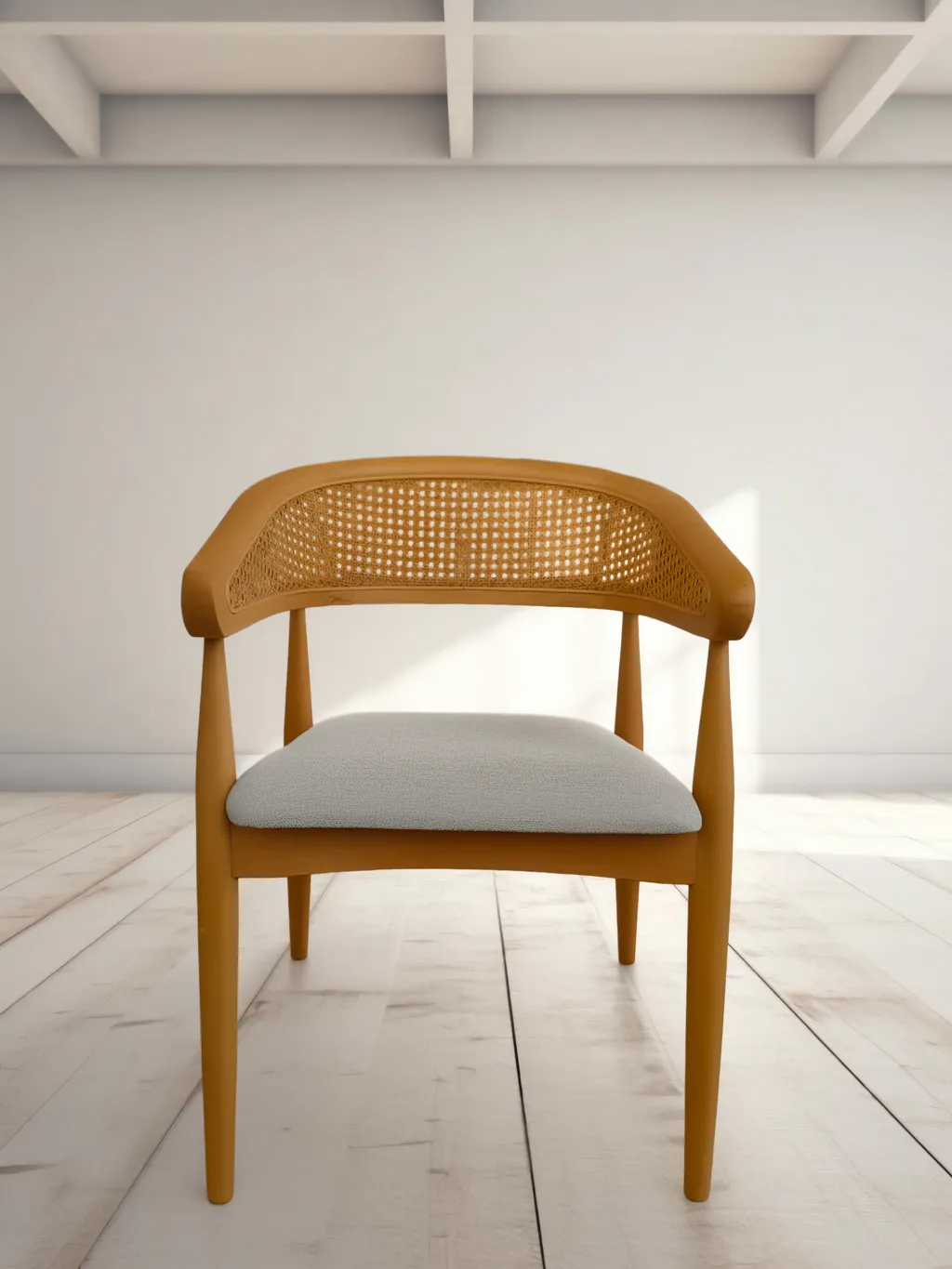
The chairs incorporate a steam-bent solid oak frame, with the backrest and seat carved from a single 30mm plank. The seat cushion uses the same dual-density foam system as the Traverten Masa, but with an additional 10mm layer of 60 kg/m³ latex foam for enhanced resilience. The fabric—a 320 gsm Belgian linen blend (55% linen, 45% cotton)—is treated with a Teflon coating that achieves a Martindale rub count of 40,000 cycles, meeting contract-grade durability standards. The sideboard features a travertine top with a CNC-routed finger-joint that aligns with the table’s profile, creating a visual continuity that is both functional and aesthetic.
Technical Specifications: The Numbers Behind the Craft
Wood Species and Moisture Management
All solid wood components are sourced from FSC-certified suppliers. Oak is quarter-sawn to minimize cupping, with a final MC of 7% ±1%. Walnut is flat-sawn for figure, stabilized to 6.5% MC. Each board is finger-jointed at 1m intervals using a 12mm-long profile with 4 teeth per joint, ensuring a bond strength exceeding 1,200 psi.
CNC Tolerances and Finishing
Our 5-axis CNC centers (HOMAG and SCM) operate with a repeatability of ±0.05mm. All visible surfaces are sanded through 220-grit, then hand-sanded with 320-grit for a closed-pore finish. The clear coat is a two-part polyurethane (80% solids) applied at 120 microns dry film thickness, achieving a hardness of 2H on the pencil scale.
Foam and Fabric Standards
Foam densities are verified using ASTM D3574. The core foam (50 kg/m³) has a compression set of less than 5% after 24 hours at 50% deflection. Fabric GSM is tested via ISO 3801; our standard upholstery weight is 320–400 gsm, with a minimum of 25,000 rubs (Wyzenbeek) for residential use.
Joinery Techniques: Beyond the Visible
Every Artes piece employs at least one traditional joinery method, adapted for modern CNC precision. The Zara chairs use a bridle joint at the arm-to-backrest connection, with a 12mm-long slot and 8mm-wide tenon, glued with PVA and clamped for 6 hours. The travertine-to-metal connections use a proprietary 3M VHB tape (4900 series) in combination with silicone gaskets, allowing for thermal expansion of 0.1mm per meter per 10°C without stress cracking.
Key Takeaways
- Material Purity: Solid Anatolian oak and American black walnut, kiln-dried to 6–8% MC, with FSC certification.
- Stone Engineering: Denizli travertine stabilized for 14 days, CNC-machined to ±0.1mm, and sealed to 85% porosity reduction.
- Upholstery Durability: Dual-density foam (50/35 kg/m³) with ILD 55/25, wrapped in full-grain Italian leather or 320 gsm Belgian linen with 40,000 rub resistance.
- Joinery Precision: Mortise-and-tenon with 0.2mm interference fit, bridle joints, and stainless steel dowels for structural integrity.
- Finishing Standards: Two-part polyurethane at 120 microns, 2H hardness, with hand-sanding through 320 grit.
FAQ
How does Artes ensure that travertine tabletops do not stain or crack over time?
Our travertine is sealed with a penetrating solvent-based sealer that reduces porosity by 85%, preventing liquid absorption. The stone is also CNC-machined with a 10mm brass insert that acts as a thermal expansion buffer, minimizing stress from temperature changes. We recommend using coasters and cleaning with a pH-neutral stone cleaner to maintain the seal integrity.
What is the lead time for a custom order, and can I specify my own wood species?
Standard production lead time is 8–12 weeks from order confirmation. We can accommodate custom wood species such as European ash, cherry, or teak, provided the material meets our moisture content and structural requirements. Please contact us via our contact page to discuss your project. Custom orders require a 50% deposit and approval of a material sample.
Are your furniture pieces suitable for commercial use, such as restaurants or hotels?
Yes, many of our pieces are specified for contract use. The Zara Traverten Yemek Takımı, for example, uses foam with a compression set of less than 5% and fabric with a Martindale rub count of 40,000 cycles, exceeding commercial standards. We offer a 5-year warranty on structural components for residential use and a 2-year warranty for commercial applications. For bulk orders, please visit our wholesale page.
Conclusion: The Artes Standard
At Artes Design, we do not simply manufacture furniture—we engineer artifacts that bridge the gap between natural material and human craft. Every travertine slab, every oak tenon, every leather seam is a decision made with the knowledge that this piece will outlast its first owner. Our commitment to CNC precision (±0.1mm) and artisanal finishing (hand-sanding through 320 grit) is not a marketing claim; it is a production reality verified by every piece that leaves our factory. We invite you to explore our full collection at /urunler and experience the difference that material integrity and joinery heritage can make in your daily environment.